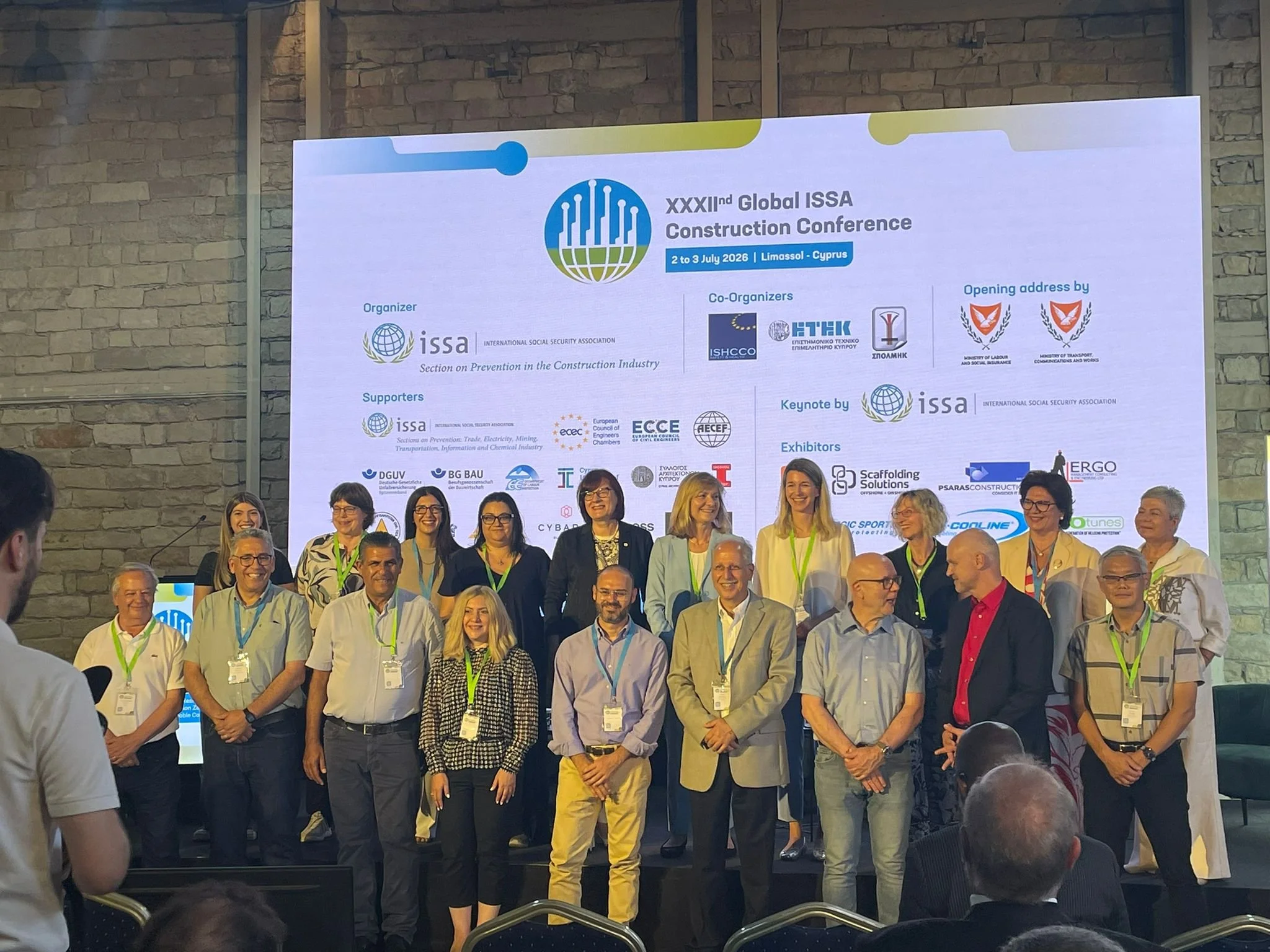
The Path to Safer Industrial Helmets: Strategic Sports, ERT and Atlas at the XXXIInd Global ISSA Construction Conference
In 2023, an estimated 564,000 workers across the EU were injured in a workplace fall.
Roughly 508 never recovered.
Falls are the leading cause of fatal accidents on construction sites worldwide, and the leading is the fact that most workers wear helmets that were not designed to truly protect them from fall injuries.
"We can do so much better," Strategic Sports Managing Director Norman Cheng said, addressing a room full of construction industry leaders at the ISSA Construction Conference in Limassol, Cyprus.
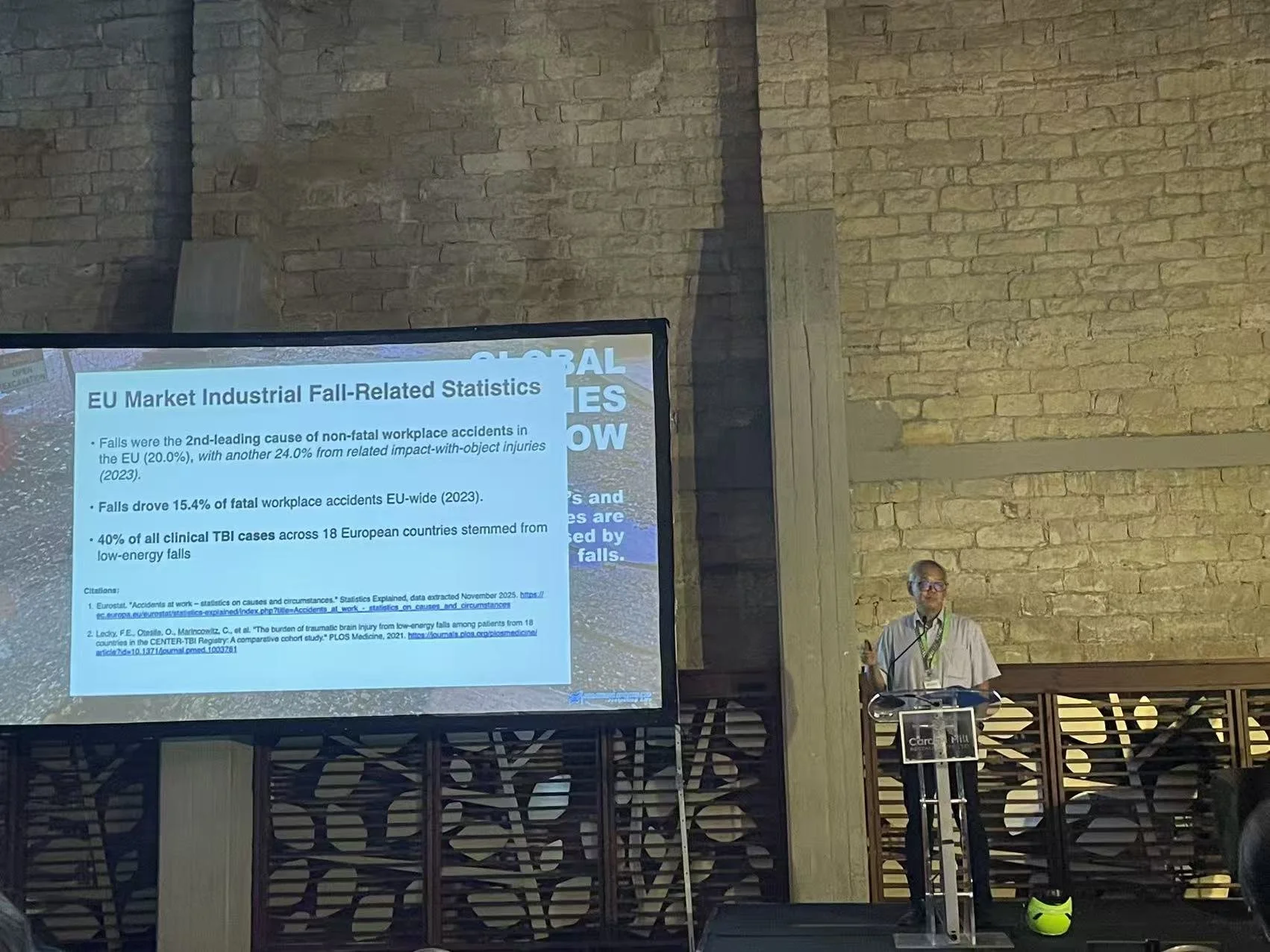
That message, that the industry owes its workers more than what current helmet standards require, was the theme of Cheng's presentation. Hosted by the International Section of the ISSA on Prevention in the Construction Industry, this year's conference focused on the theme of "From Risk to Resilience: Achieving Vision Zero with AI and Sustainable Construction," bringing together experts, researchers, and industry leaders from around the world to talk about the future of worker safety on construction sites.
Cheng joined the Occupational Safety and Health breakout session to present on energy reducing technology in industrial helmets, and why the standard job site helmet needs to catch up with what we now understand about how falls actually happen.
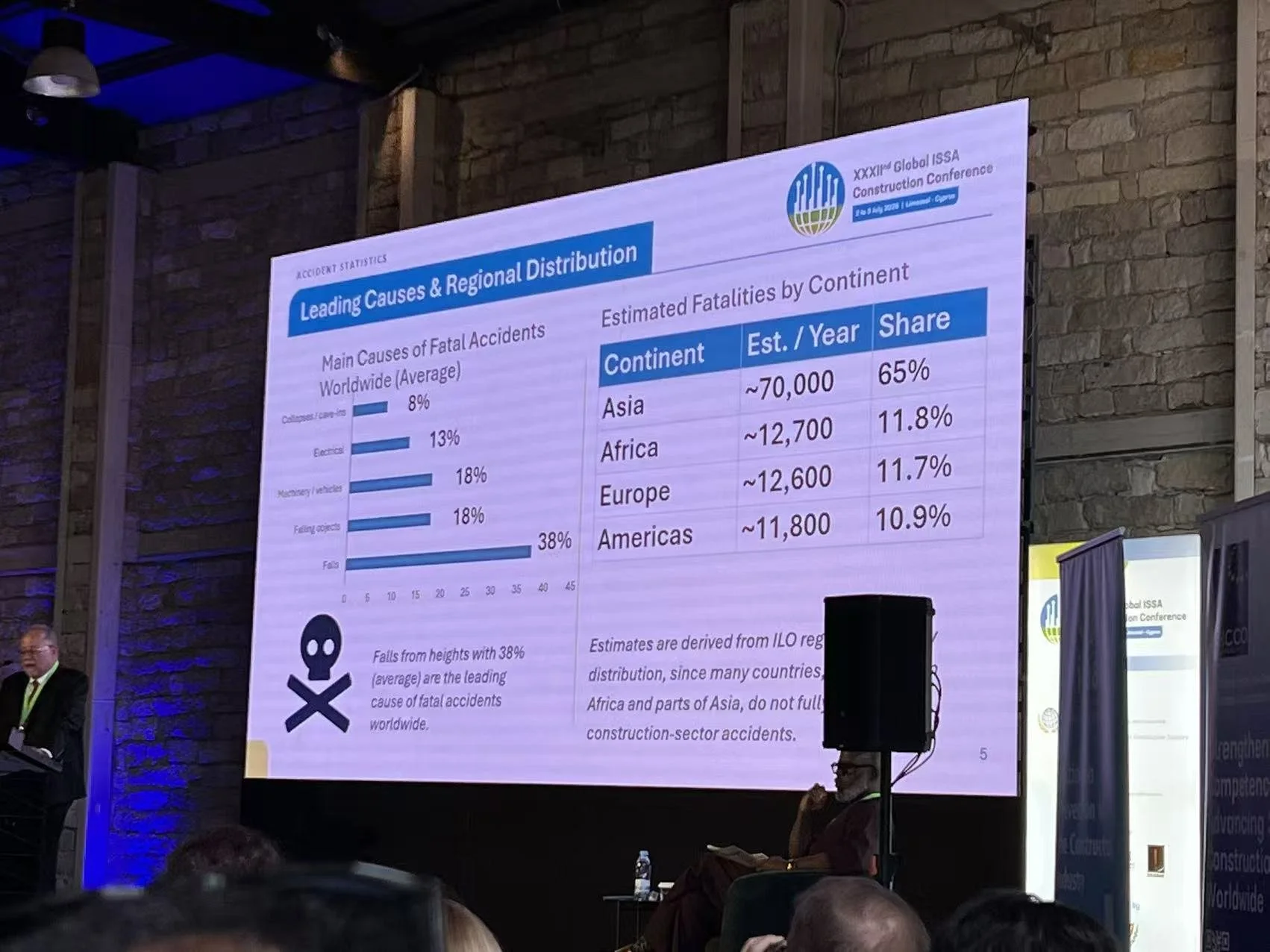
Why Current Standards…Fall Short
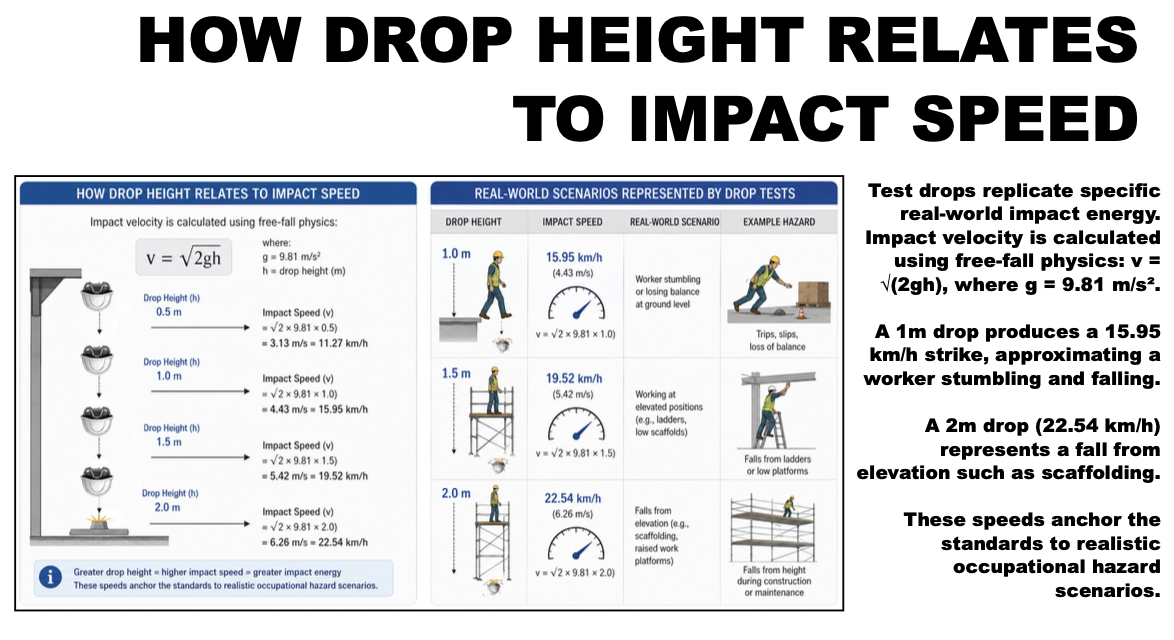
Most industrial helmets on job sites today are certified only to EN397, a static linear impact test that simulates a falling object striking the top of the helmet. The EN12492 standard adds lateral impacts, but very few helmets are designed to meet it. Cheng broke down the physics behind these tests using simple free-fall math: a one-meter drop produces a strike speed of roughly 16 km/h, approximating a worker stumbling and falling, while a two-meter drop produces about 22.5 km/h, representing a fall from elevation such as scaffolding. Those numbers anchor the standards to real job site scenarios, yet neither EN397 nor the rarer EN12492 simulates the rotational energy that such falls generate.
To Cheng, that gap is unacceptable. He said the EN397 Type 1 helmet, the most common helmet on construction sites today, is truly inadequate for the falls workers actually experience. Type 2 is better, he said, but still not enough. "We have a moral obligation to protect our workers. To do anything less is just wrong." He also pointed to a mismatch he sees across the industry: construction projects worth millions or even billions of dollars, often built by workers wearing $10 dollar helmets.
ERT: Built for Real World Industrial Impacts
This is the gap Cheng built ERT™ (Energy Reduction Technology) to close. ERT is a patented, 4mm layer of soft polymer foam that adds a layer of protection against brain injuries in both linear and rotational impacts. Cheng shared technical details about ERT and highlighted third party lab tests. On hand were the latest ERT equipped ACT helmets from Strategic Sports partner Atlas.
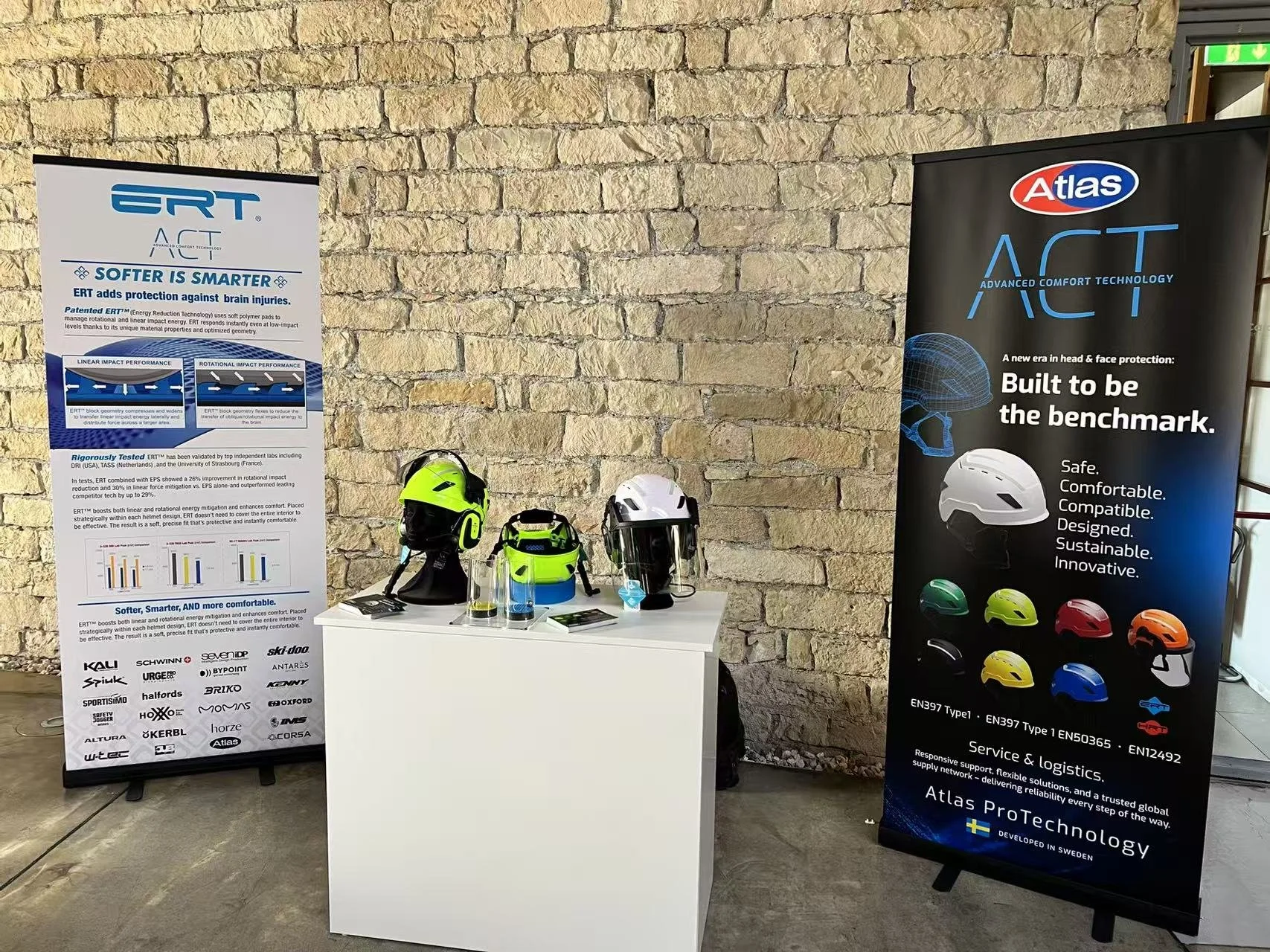
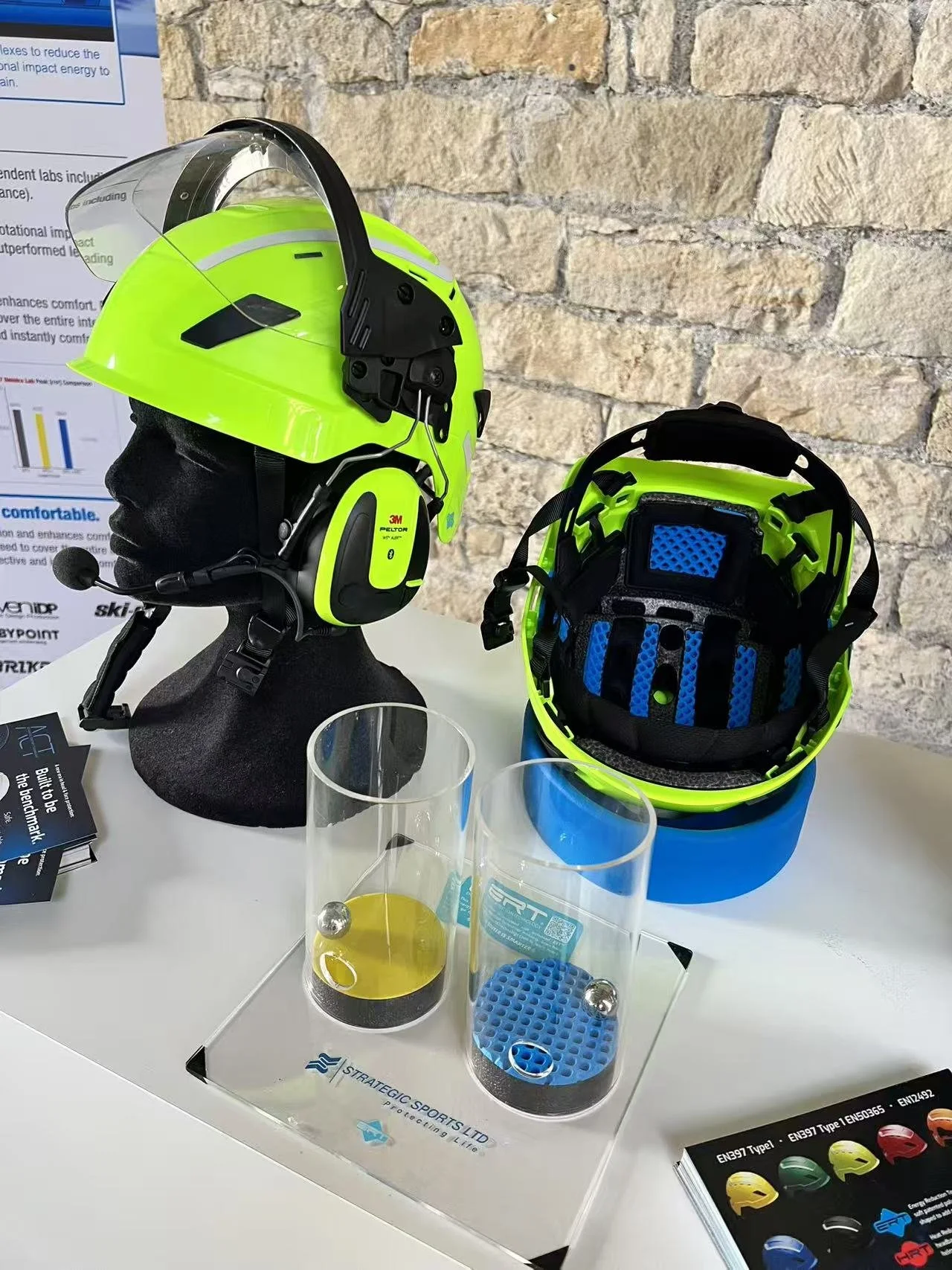
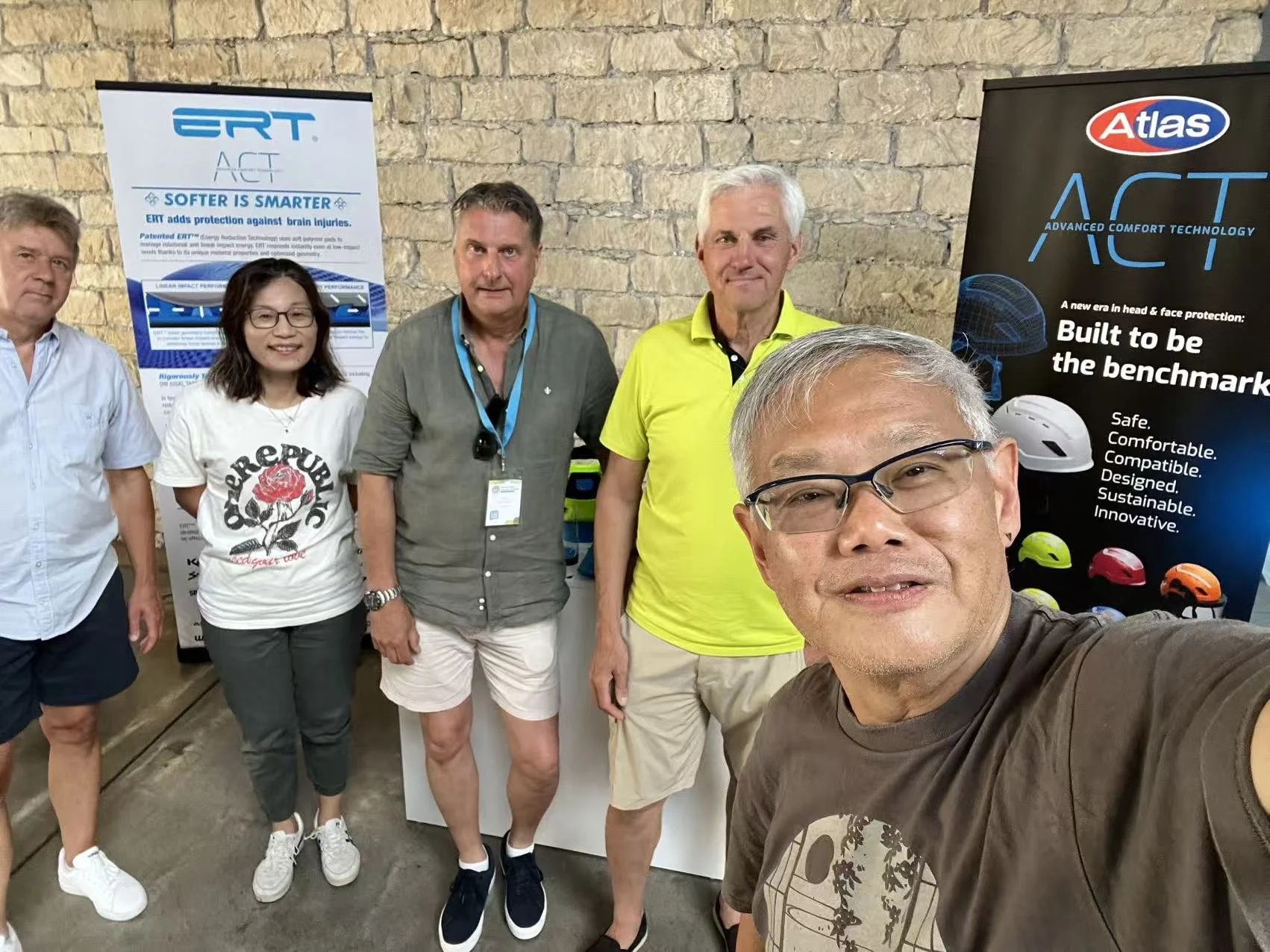
“Softer is smarter,” Cheng said, quoting the trademark slogan that tells the ERT story. "An impact happens in milliseconds and ERT responds instantaneously to mitigate the impact energy that’s transmitted to the brain,” Cheng said. On hand were the latest ERT equipped ACT helmets from Strategic Sports partner Atlas, along with key members of their staff.
Protecting Life: The Strategic Sports Mission Continues
Cheng left Cyprus with the same conviction he arrived with, deepened and sharpened by a room full of people working on the same problem from different angles. “These are powerful injury and fatality statistics,” Cheng said, “But if you’re a family member of one of the people who died, it’s not a statistic, it’s a tragedy.”
“And this is why we must be on a mission,” Cheng said. “We can push for more rigorous certification tests for the future. But we have the technology to make better helmets and save lives in the industrial space right now, and with Atlas, we already are,” Cheng said.