
Strategic Sports in the News: Navigating a Shifting Global Manufacturing Landscape
Strategic Sports Managing Director Norman Cheng was recently featured in a live Channel News Asia segment examining the evolving challenges facing Chinese manufacturers operating in an increasingly complex global trade environment.
The brief interview was filmed on the factory floor at Strategic Sports’ Vietnam operations, a fitting backdrop for a conversation centered on supply chain resilience and long-term manufacturing strategy. Cheng can be difficult to track down, often moving between Vietnam, Portugal, and Hong Kong within the same week as Strategic continues to expand and rebalance its global production footprint.
A key focus of the interview was Strategic Sports’ early and deliberate approach to right-shoring manufacturing. As global tariffs and trade pressures intensified in 2025, particularly following multiple rounds of U.S. tariffs targeting Chinese-made goods, many manufacturers were forced into reactive decisions. At Strategic Sports, those conversations began years earlier.
“Early in 2017, one of our largest clients called and said, ‘we have a challenge,’” Cheng recounts. “We had a brainstorming session on what to do about the incoming U.S. President’s talk about massive tariffs while on the campaign trail.”
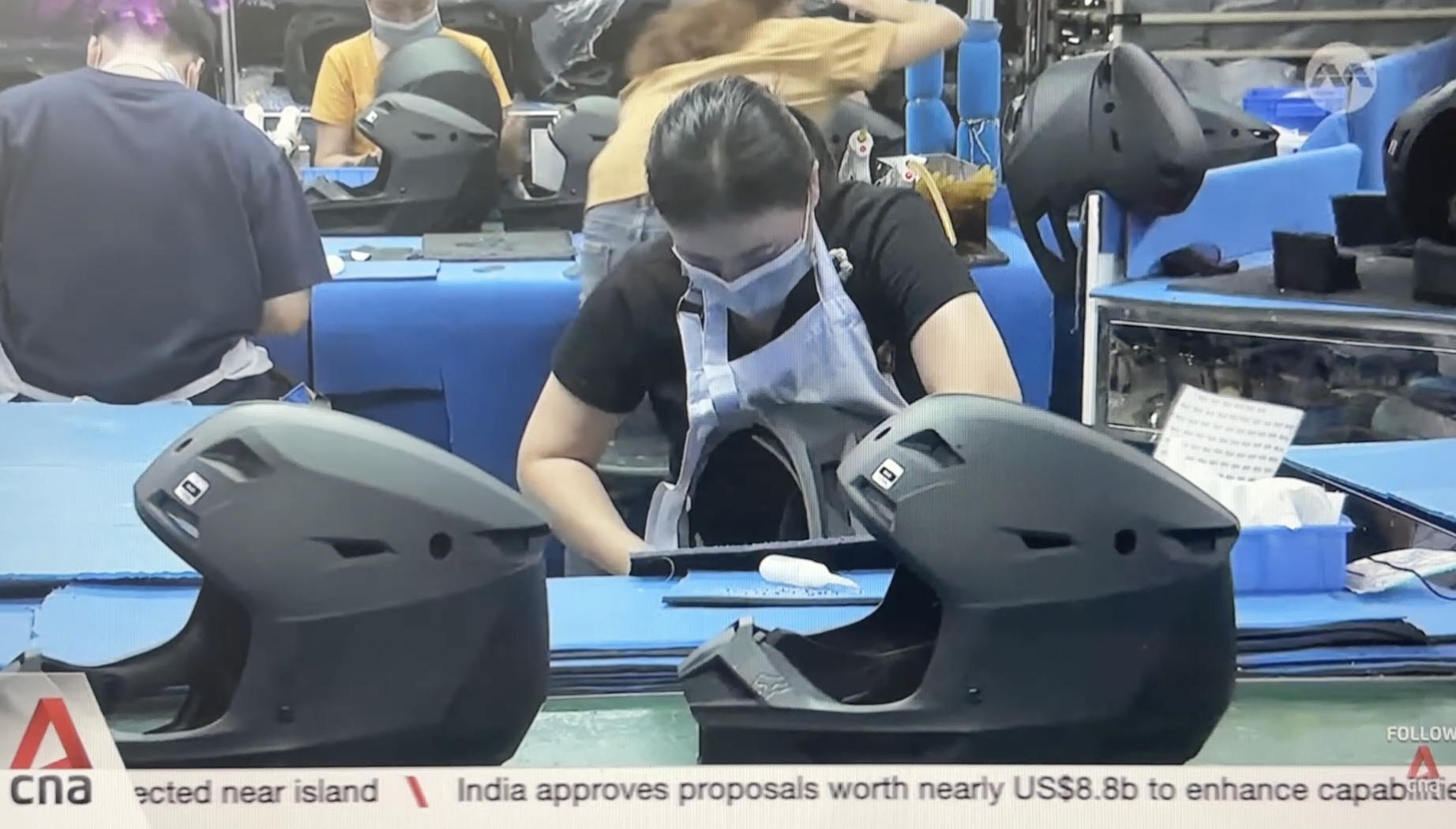
Rather than relying on trans-shipping or surface-level relocation, Strategic Sports committed to a more substantial shift, moving core manufacturing technologies, tooling, and engineering capability directly into Vietnam. Over the past several years, this approach has resulted in significant expansion of Strategic’s Vietnam facilities, including increased capacity, deeper technical resources, and broader vertical integration. The objective has remained consistent: maintain quality, consistency, and safety performance while reducing risk and complexity across global supply chains.
Cheng also shared his optimism about Strategic Sports’ position within the Association of Southeast Asian Nations (ASEAN), a regional economic community comprising ten member countries with a combined population of more than 700 million people. With Vietnam’s participation in multiple free trade agreements, including its agreement with India, Strategic Sports now operates within a broader framework that supports preferential trade access, reduced tariffs, and closer integration with fast-growing global markets. For Cheng, this represents not only a manufacturing advantage, but an opportunity to better support customers as their businesses expand across Asia, Europe, and beyond.
As Cheng noted in the interview, this model has since become a blueprint for many manufacturers navigating similar challenges. For Strategic Sports, it reflects a long-held belief that durable partnerships, forward planning, and real investment, not shortcuts, are what allow global manufacturing businesses to adapt and continue delivering for their customers.