
Repainting a factory doesn't sound like much of a story. Building walls age. Paint fades. And eventually someone picks a new color.
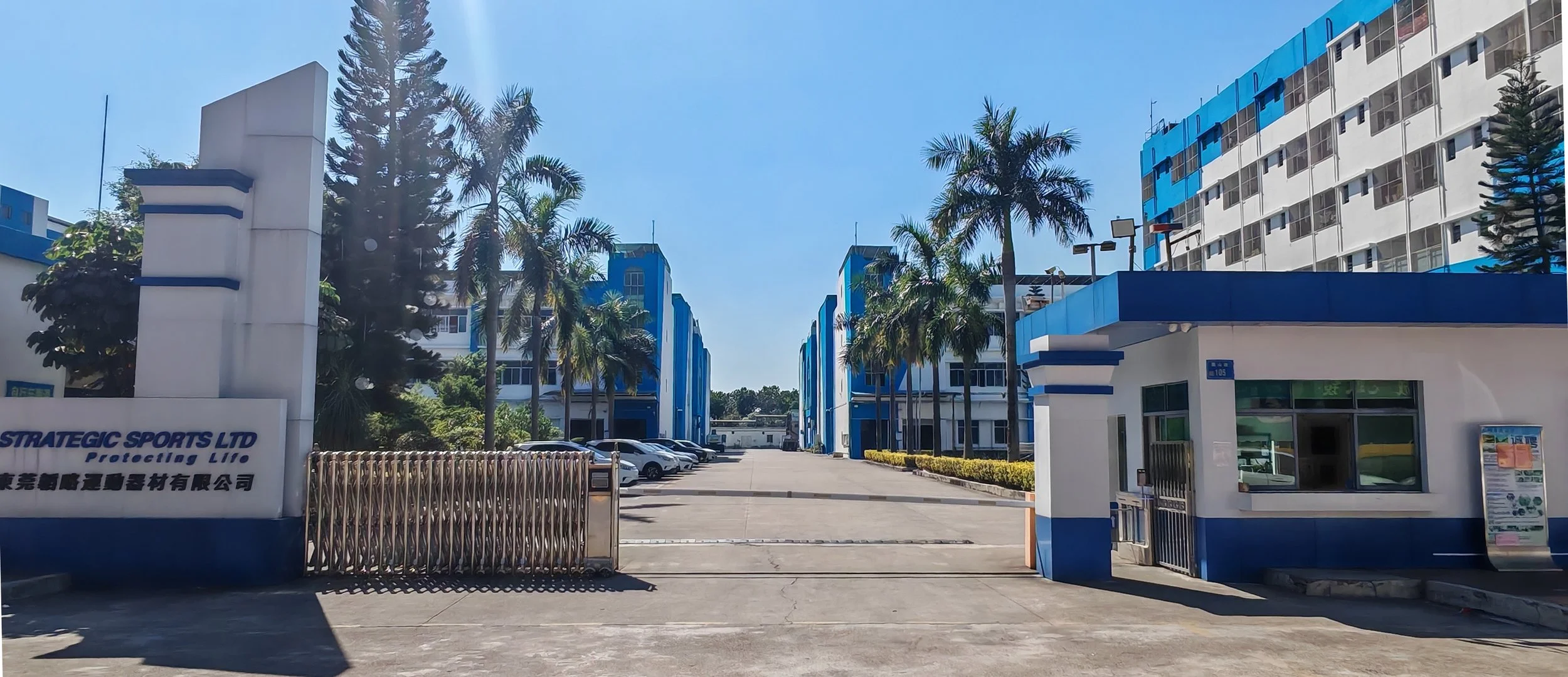
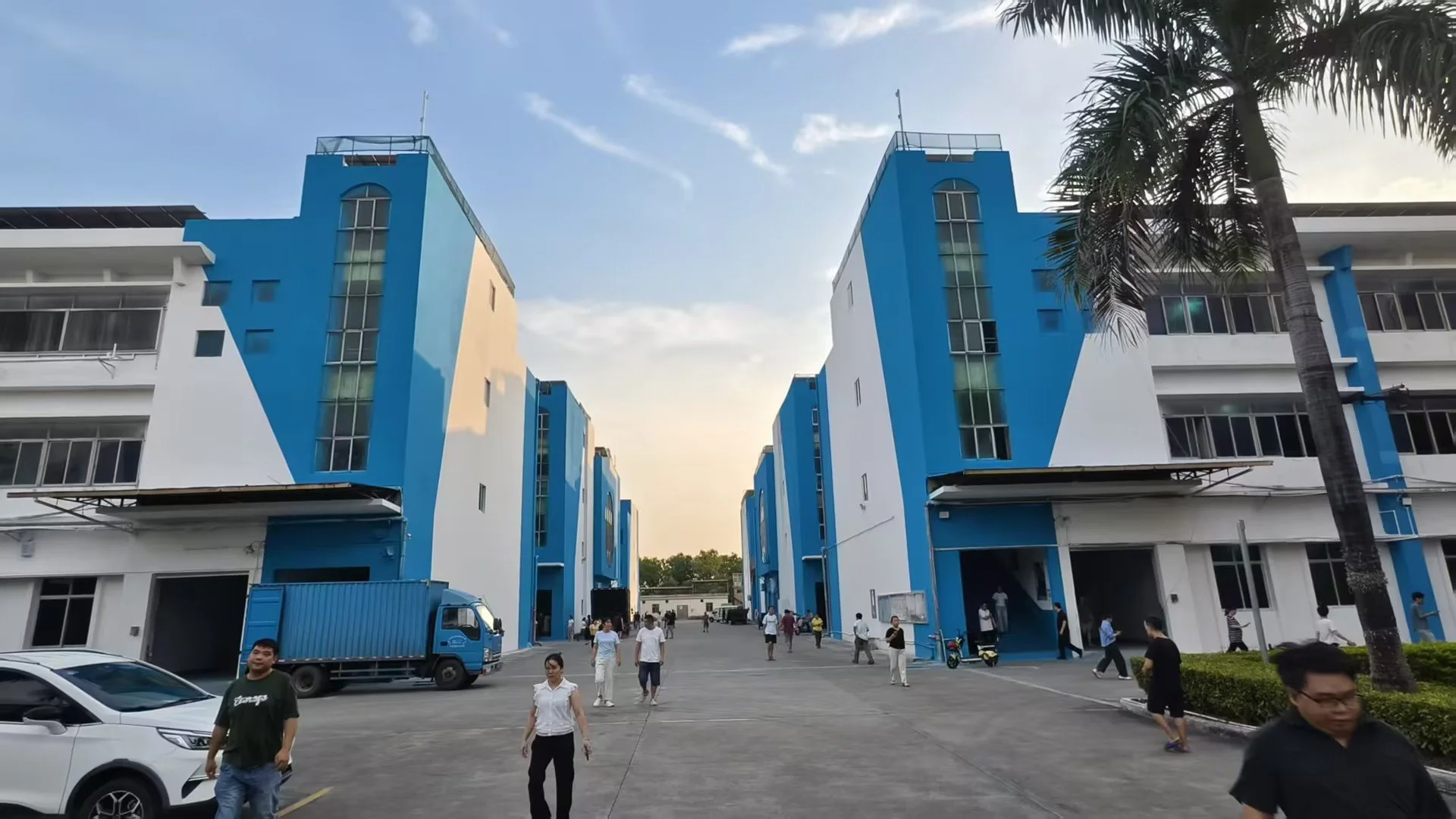
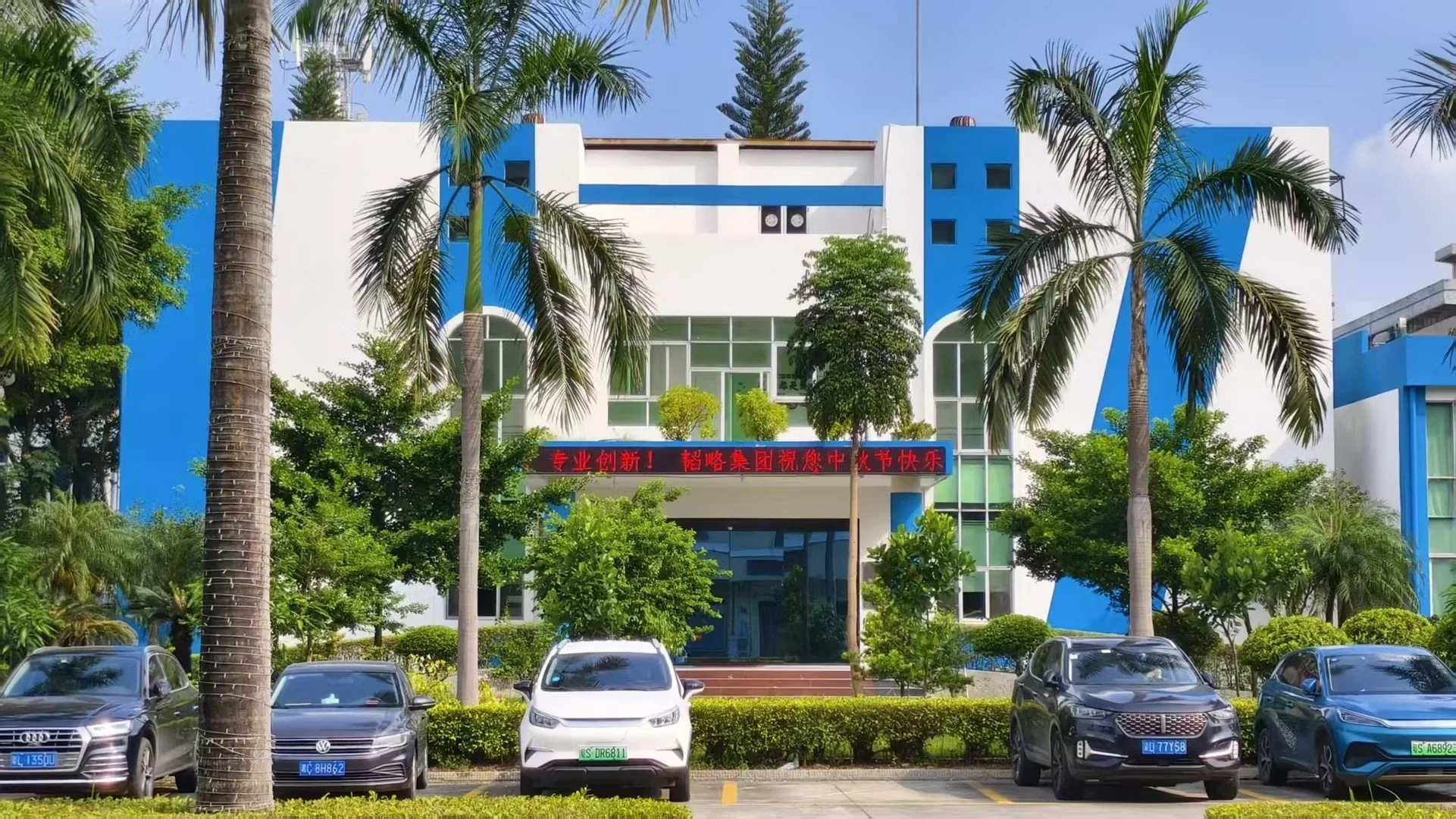
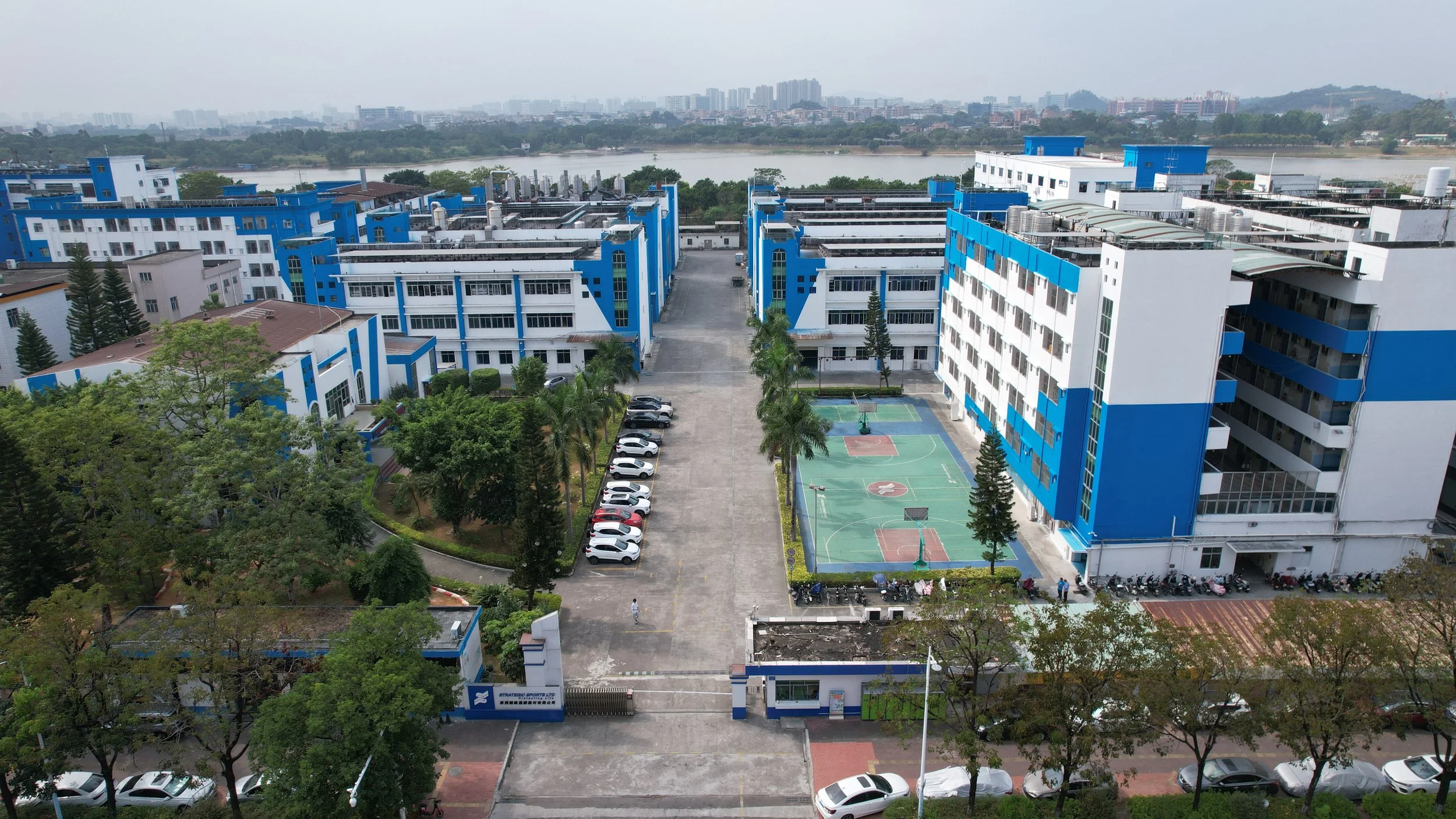
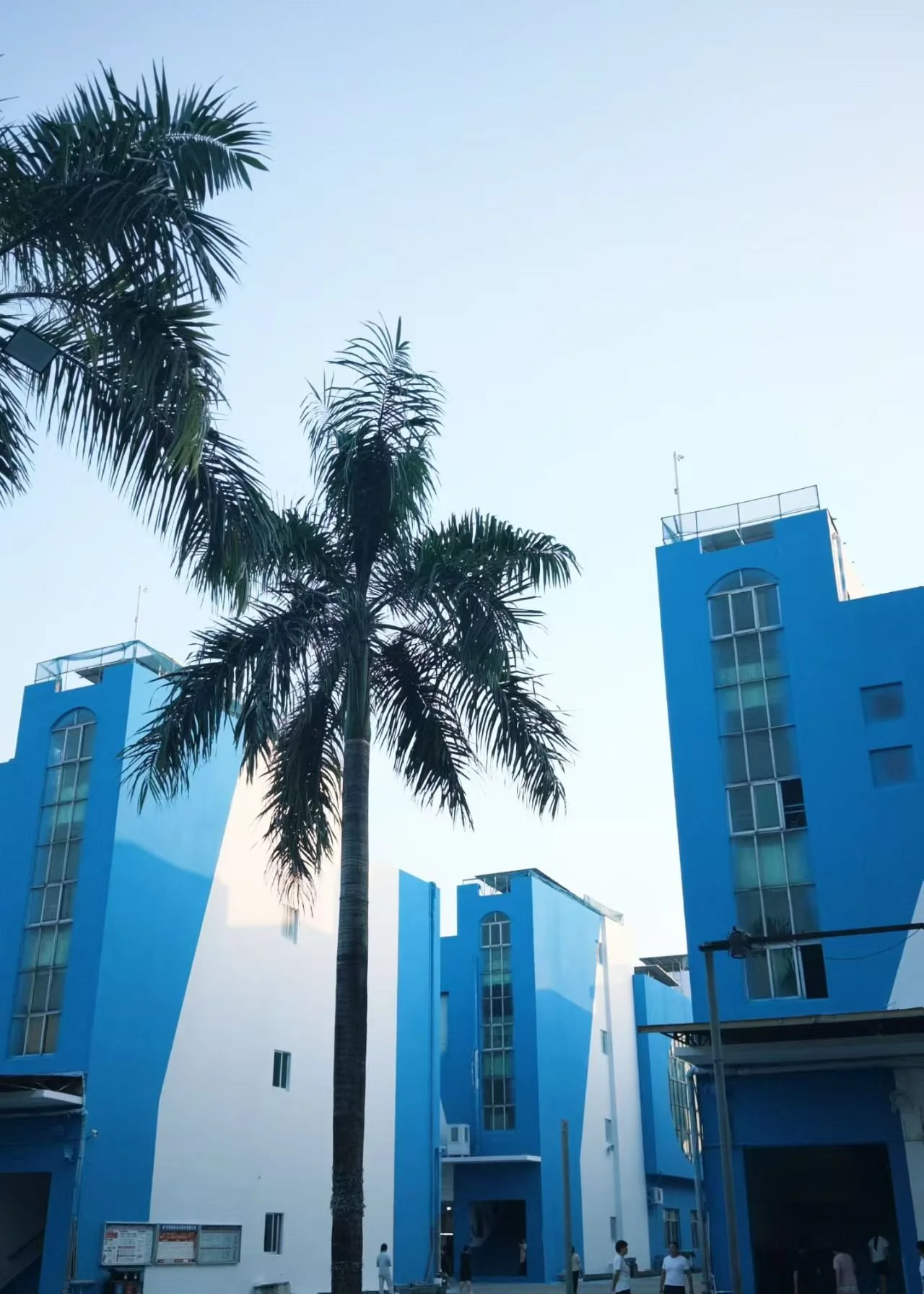
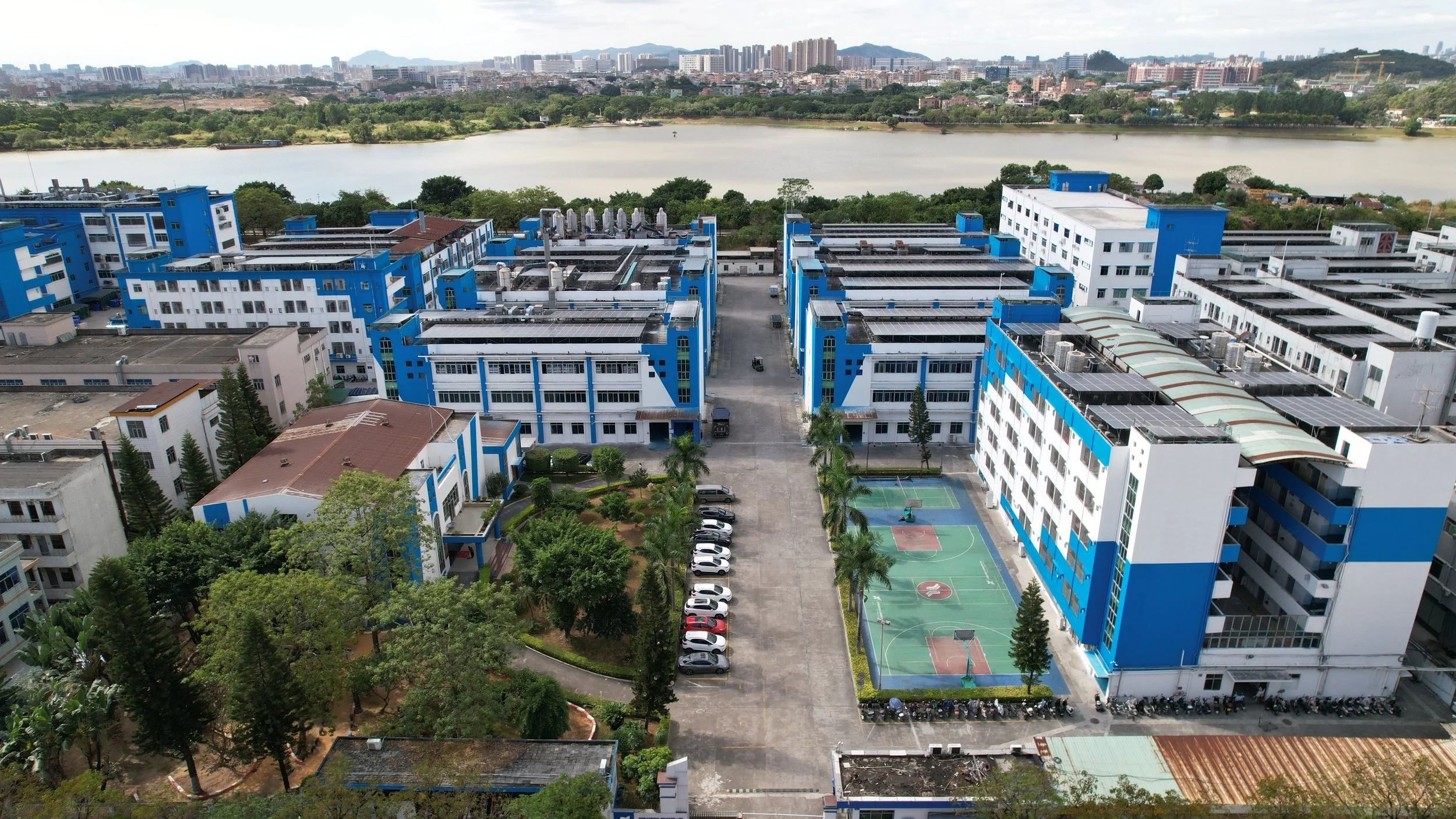
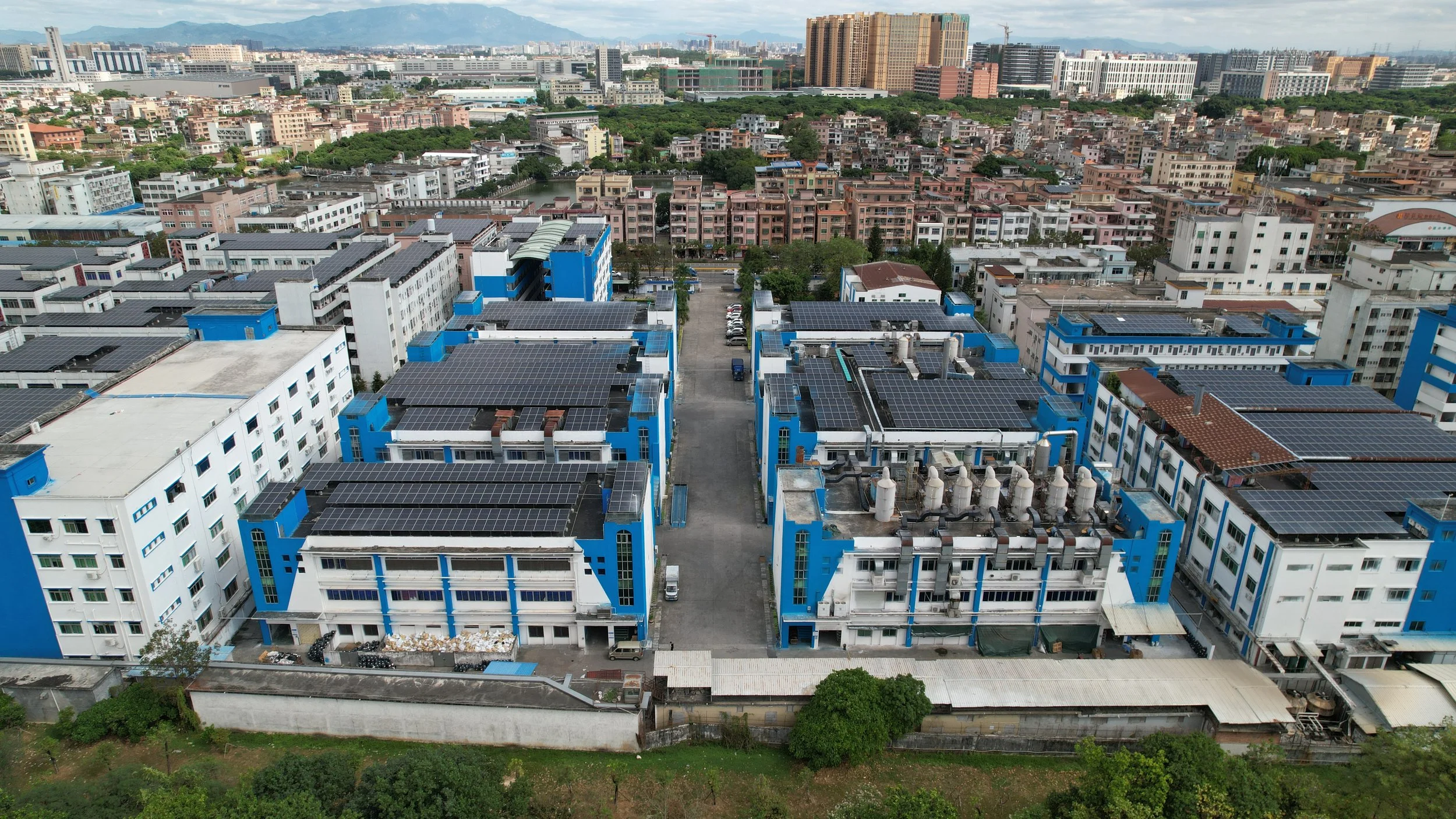
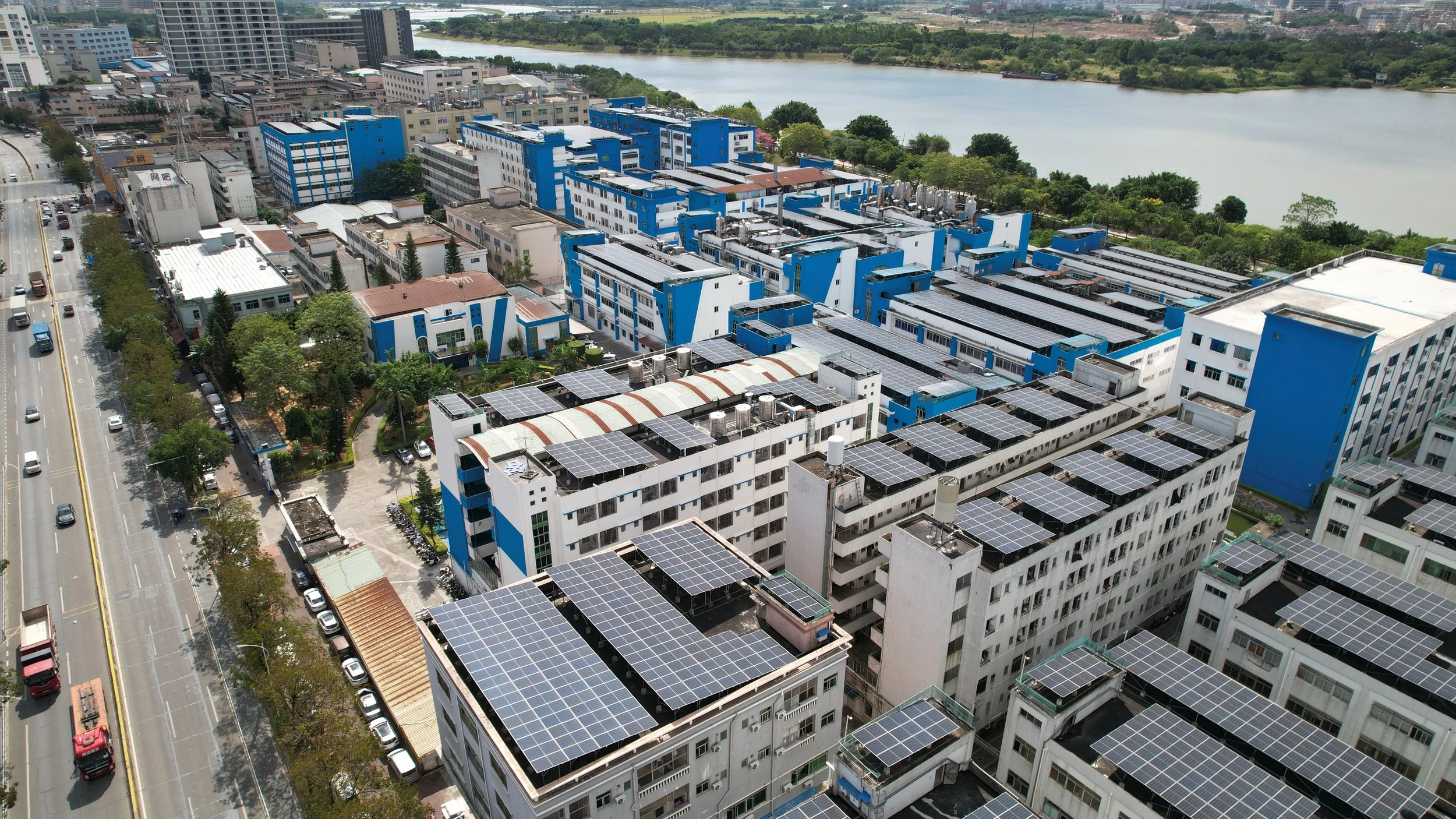
But, when it came time to refresh our Chashan factory in China, we saw a chance to put Strategic Sports values into practice, one wall at a time. The paint we chose is safer for the people who work inside, gentler on the environment, and built to last far longer than a typical coat.
"We spend our days designing helmets, protective padding and goggles to protect people," said Sherry Tai, Sales Director of Strategic Sports. "This way of thinking is in everything we do, and the buildings our people work in deserve that same care.
More than Paint
We chose a real stone paint system: a water-based coating made with natural quartz sand accented in Strategic blue, of course. It goes on in three layers, and each one has a job.
A sealing primer soaks into the wall and hardens it, blocking the salts and alkali that cause white, powdery stains.
A flexible stone mid-coat creates the stone texture and moves with the wall, so it resists cracking and peeling.
A self-cleaning topcoat lets rain wash the surface, so the walls stay cleaner with less scrubbing.
The system keeps rain out while letting moisture inside the wall escape, which helps prevent damp and mold. The supplier rates it for a service life of more than 15 years.
Keeping Cool, Naturally
The coating also reflects sunlight. According to the supplier, it can lower wall surface temperatures by 8 to 12°C in summer and indoor temperatures by 3 to 5°C, without adding insulation boards. In winter, it helps hold heat inside.
For a factory, that means a more comfortable workspace and less energy spent on air conditioning and heating.
Better for our People
People First starts with the air our team breathes. Volatile organic compounds, or VOCs, are the chemicals behind that strong "fresh paint" smell. China's national standard allows up to 120 grams per liter. The supplier lists this paint at 5 to 10 grams per liter, with no formaldehyde, benzene, or heavy metals.
The application process was cleaner too. Low-pressure spray equipment cuts down on splatter, dust, and noise. The system pairs spraying for large walls with hand troweling for edges and repairs, keeping the finish even and the work moving.
Better for the Planet
The quartz sand finish gives us the look of stone without quarrying it. The supplier says it weighs 80% less than hung stone panels, which means less load on the building and no risk of panels falling. The spray process wastes less material, improving material use by 15%. And a coating that lasts 15 years or more means fewer repaints and less waste over time.
It's the same thinking behind the solar power, rainwater recycling, and coal-free biomass steam at our Vietnam factory. And as a company that’s following an SBTi (Science Based Targets Initiative) pathway and on track to be carbon-neutral by 2030, even seemingly subtle things like this, makes a difference.
The Bigger Picture
A coat of paint will never make headlines. But every decision about how we build, what we use, and who it affects is a chance to live out what we believe.
"Nobody buys a helmet because of the color of our factory walls," Tai said. "But the people who make those helmets walk past those walls every day. If we can make that space safer, cooler, and cleaner, and do it in a way that's kinder to the planet, that's worth doing right."